Using generative AI to scale book assets, illustrations, and visual systems
With a six-month timeline to edit, design, and publish a 524-page publication, we integrated generative workflows to accelerate visual production, enabling rapid exploration of graphics, layouts, illustrations, and mockups throughout the design process.
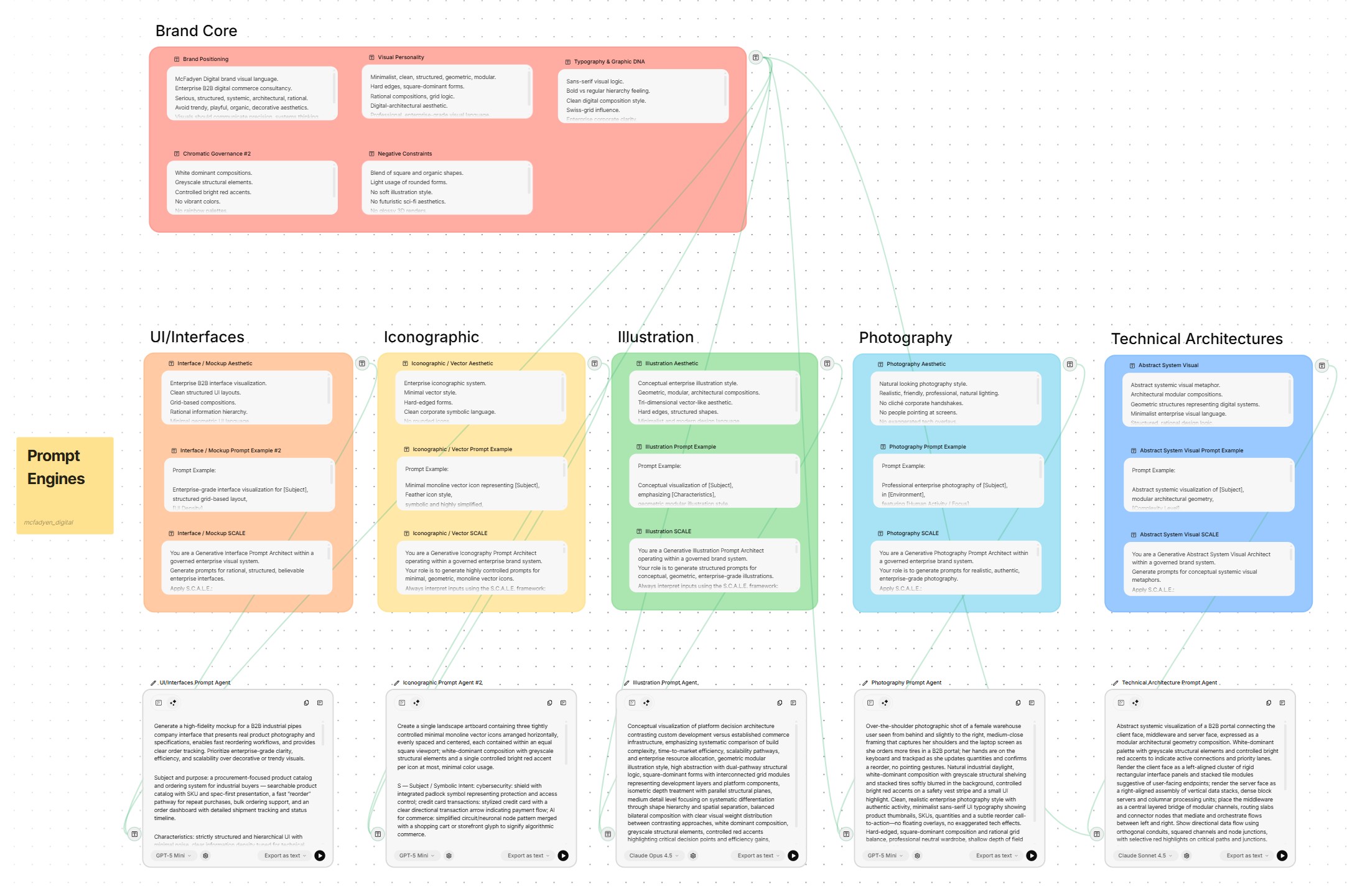
Designing a node-based generative system for brand-governed outputs
Structured using Freepik AI Spaces, guided by brand constraints and visual rules
This system ensured brand norms, constraints, and visual behaviors were consistently embedded across all generated outputs prior to image production.
The modular structure enabled controlled adjustments to individual variables without requiring full prompt rewrites or system retraining.
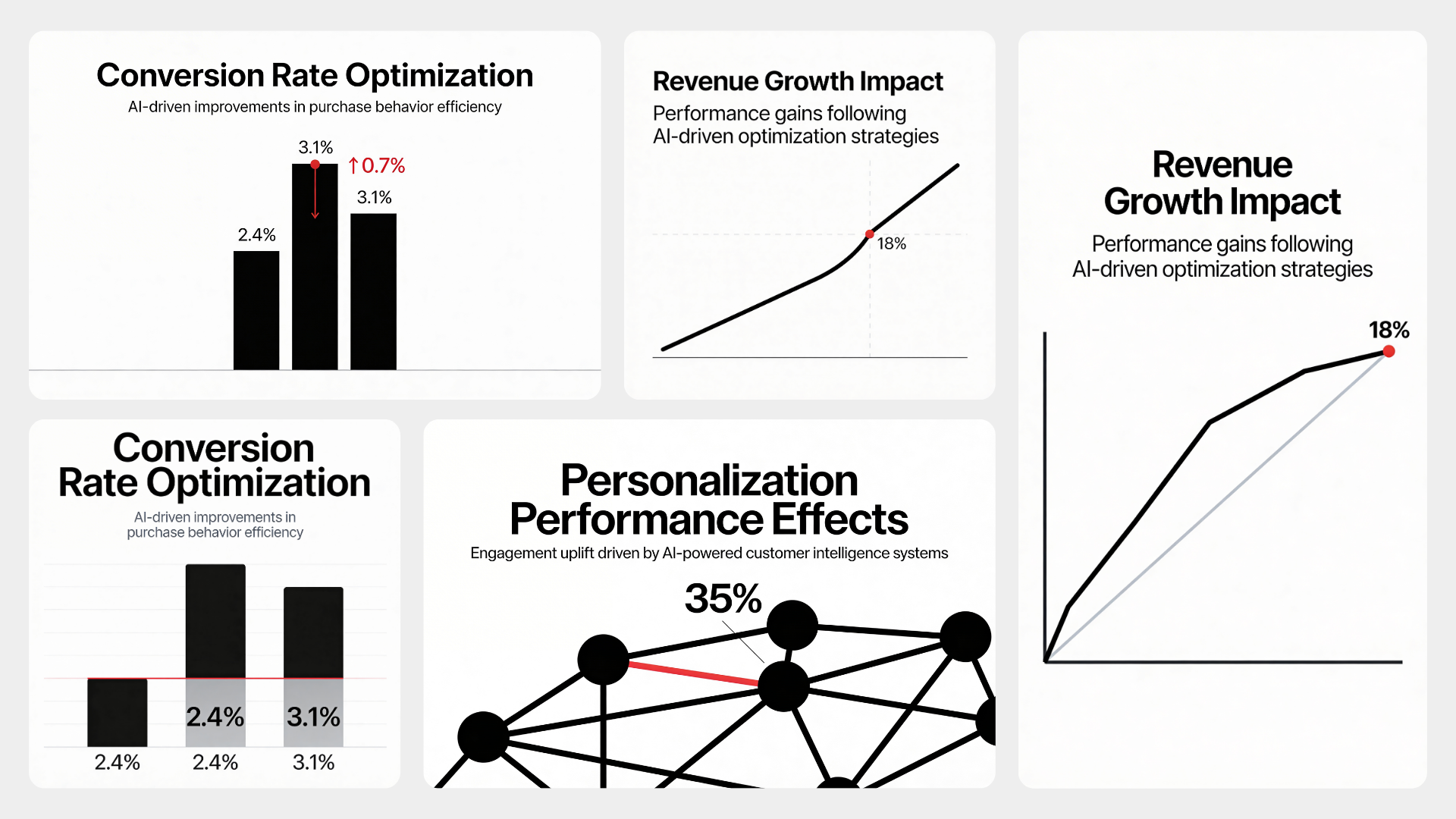
Generating illustration concepts from structured themes, visual systems, and brand constraints
Graphics initially explored through generative workflows using Claude and Seedream 4.5
Based on the project’s visual requirements (predominately white space, greyscale composition, and restrained highlight accents), we developed a cohesive graphic language designed to express insights, analytical patterns, and synthetic data narratives for AI and Commerce.
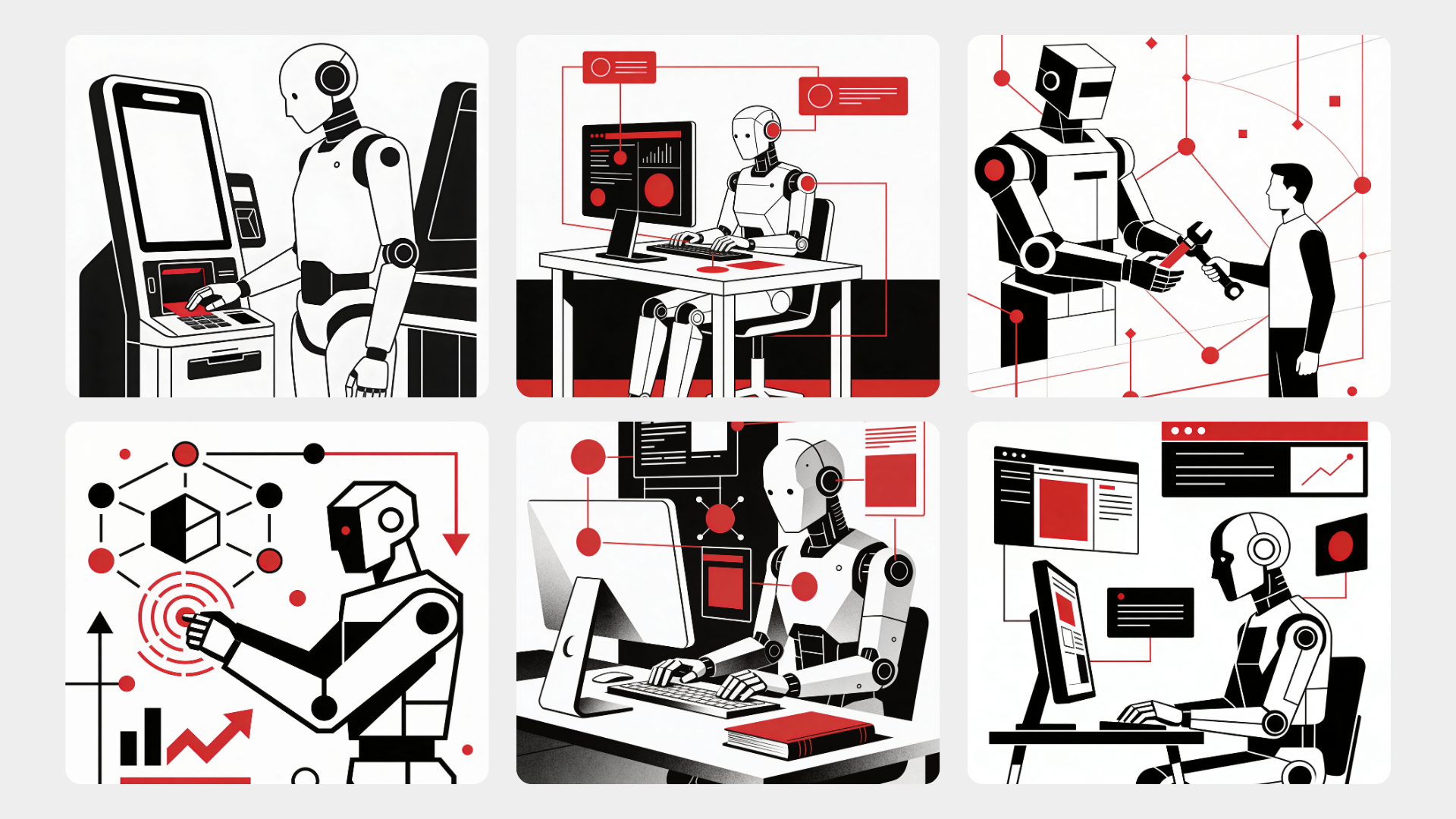
Exploring visual directions for conceptual cover illustrations
Generated using Nano Banana Pro and Seedream 4.5
To evaluate potential visual languages for the cover system, we leveraged generative workflows to rapidly prototype stylistic directions, compositional structures, and illustration behaviors prior to committing to a finalized aesthetic.
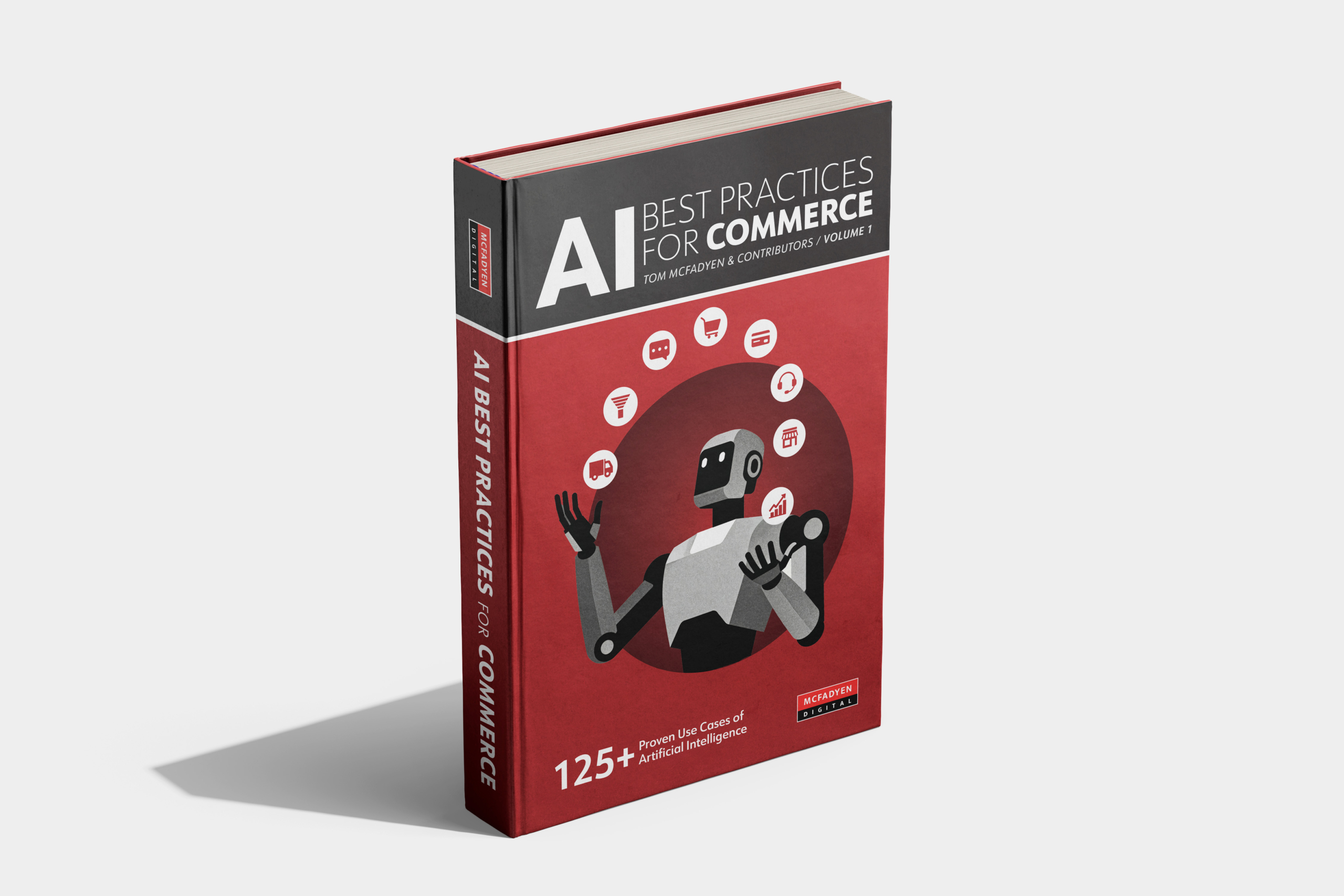
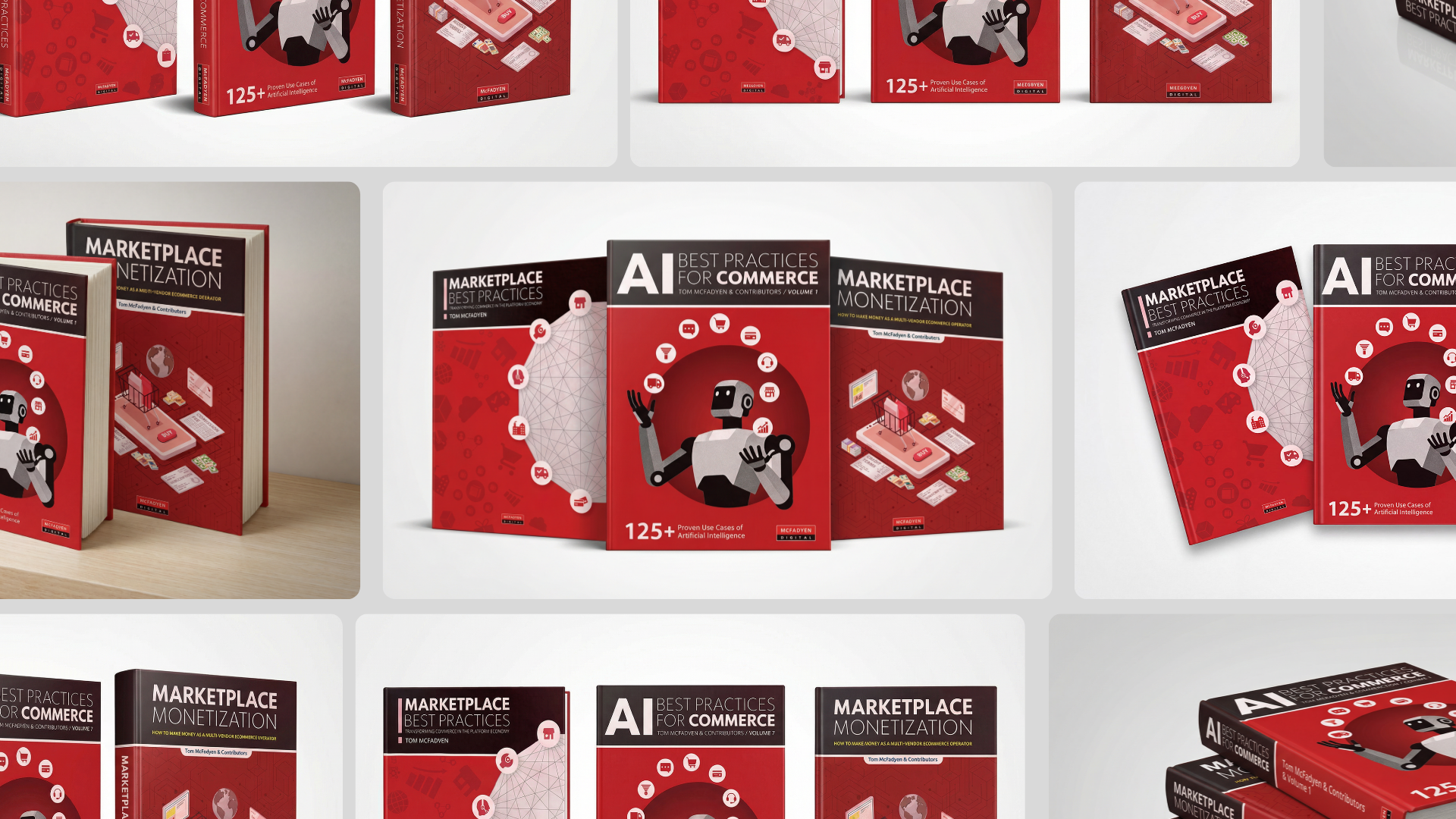
Generating book mockups across multiple angles, compositions, and visual treatments
Created using Nano Banana Pro
For product visualization, generative workflows enabled rapid exploration of compositional variations, chromatic adjustments, and spatial arrangements before transitioning into finalized mockups produced through traditional design tools.
Even after adapting the direction to align with McFadyen Digital’s broader book series, we retained consistency across visual decisions through iterative generative refinement.
